

Los delanteros móviles deben dominar muchos fundamentos, pero particularmente, 3. Son jugadores versátiles cuya principal virtud es generar y aprovechar espacios en ataque. Su participación va más allá de finalizar, ya que contribuyen a la construcción del juego y a la creación de ventajas para sus compañeros. Su impacto es determinante tanto en la progresión del balón como en la capacidad de generar oportunidades de gol.
Según el modelo de juego que desee implementar cada entrenador, se necesitarán perfiles de jugadores específicos. En este caso los delanteros móviles se caracterizan por ser jugadores versátiles con variedad de movimientos para recibir al pie y para atacar la profundidad, siendo muy rápidos en espacios medios-largos.
Si nos fijamos en algunos de los mejores delanteros del fútbol actual, veremos que muchos de ellos dominan tres fundamentos que consideramos clave en su juego y perfil. Los describimos a continuación:
1. Fundamento: desmarcarse en dirección a portería pasando por la espalda de los centrales
Uno de los fundamentos ofensivos esenciales que debe dominar el delantero móvil aparece cuando nuestro delantero no tiene el balón y el compañero poseedor del balón tiene posibilidades de hacer un pase al espacio. Los delanteros deben aprovechar cada oportunidad para moverse a las espaldas de uno de los centrales. Esto puede ser detrás del primer o segundo central, con la intención de posicionarse en su lado ciego (de modo que pierdan de vista la posición del delantero al estar enfocados en el balón).
La verdadera oportunidad de hacer esto surge cuando el compañero con el balón tiene la opción de jugar hacia el espacio. El movimiento debe ser diagonal hacia la portería. El delantero solo correrá frente al central cuando quiera fijarlo, atrayéndolo deliberadamente hacia un espacio, un movimiento que veremos reflejado en otro fundamento muy pronto.
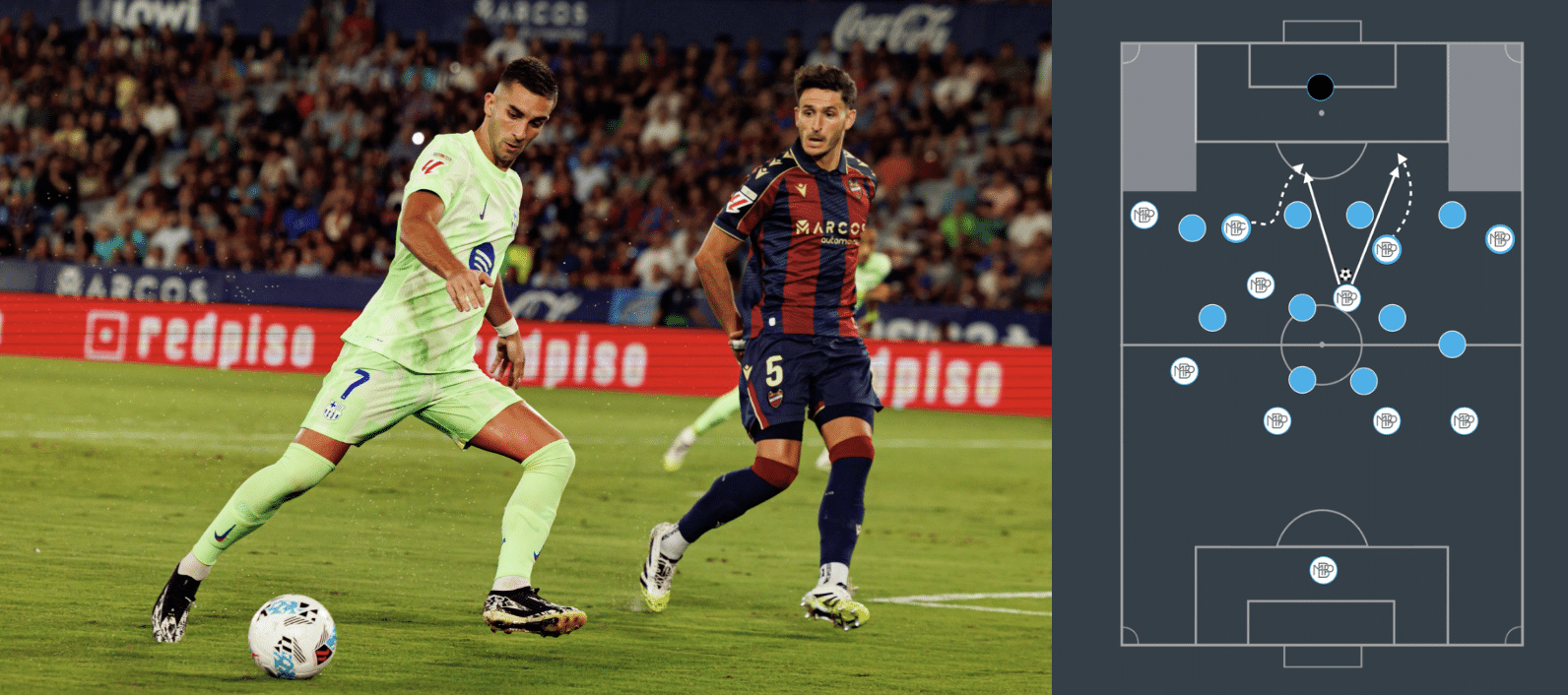
Imagen 1. Representación gráfica del fundamento de desmarcase en dirección a portería pasando por la espalda de los centrales.
2. Fundamento: desmarque diagonal en apoyo para progresar en el juego
Cuando el delantero centro está en la primera línea de pase para recibir el balón y la defensa utiliza un sistema de marcaje predominantemente zonal o se siente atraído por la posición del balón. El delantero debe desmarcarse utilizando un movimiento de apoyo en forma de “L”, con su cuerpo de lado y con la intención de progresar en el juego. El desmarque con trayectoria vertical para descarga lo veremos más adelante reflejado en otro fundamento, correspondiente al bloque de “ofrecer apoyos”.
- Si los centrales hacen una defensa poco presionante, se podrán recibir balones interiores.
- Si, por el contrario, la defensa es presionante, se generará mayor espacio de desmarque a sus espaldas.
Garantiza el intervalo de pase alejándonos de la línea defensiva, pero sin superar la línea de medios. La orientación corporal abierta obtenida durante el recorrido de desmarque será clave. El control orientado será determinante para progresar adecuadamente en esas zonas de alta densidad.
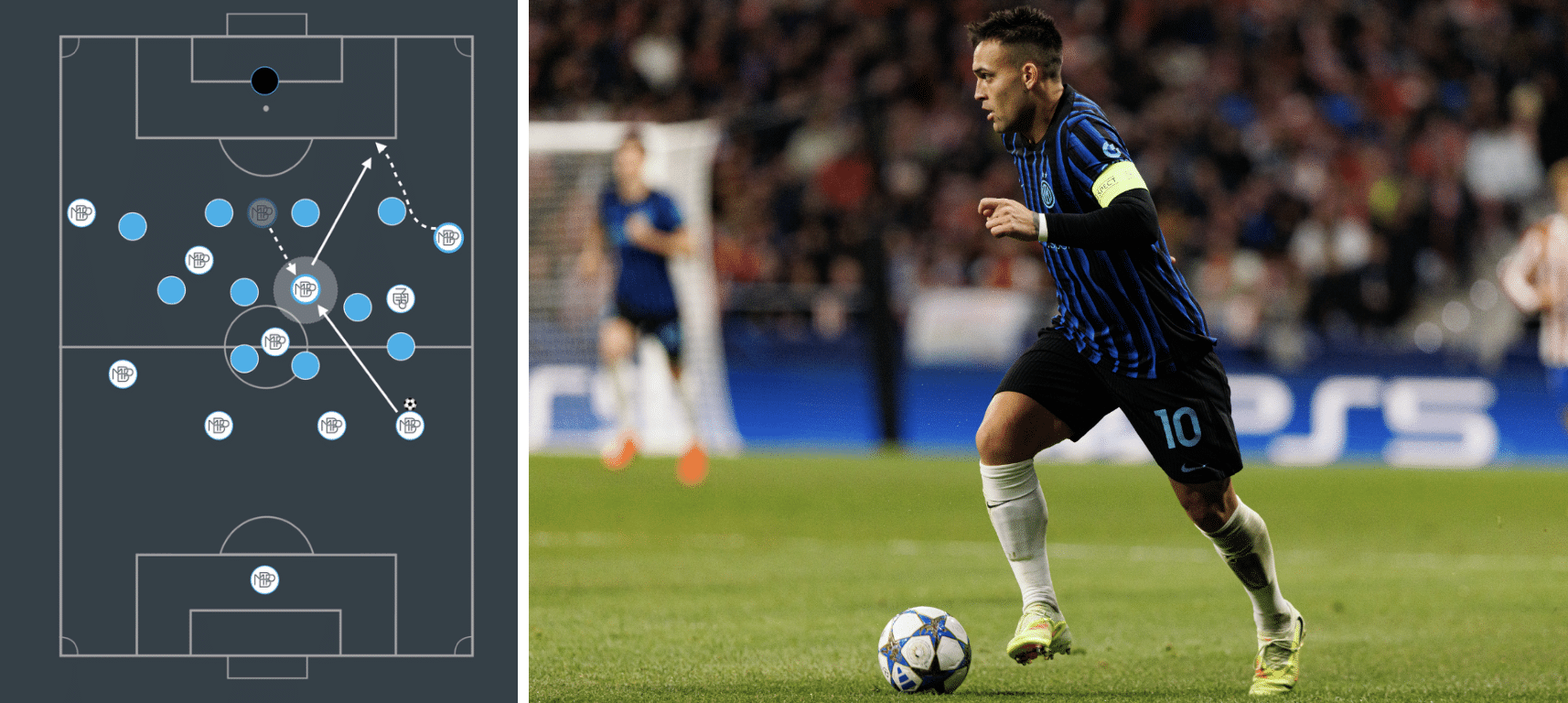
Imagen 2. Representación gráfica del fundamento de desmarcarse en diagonal en apoyo para progresar.
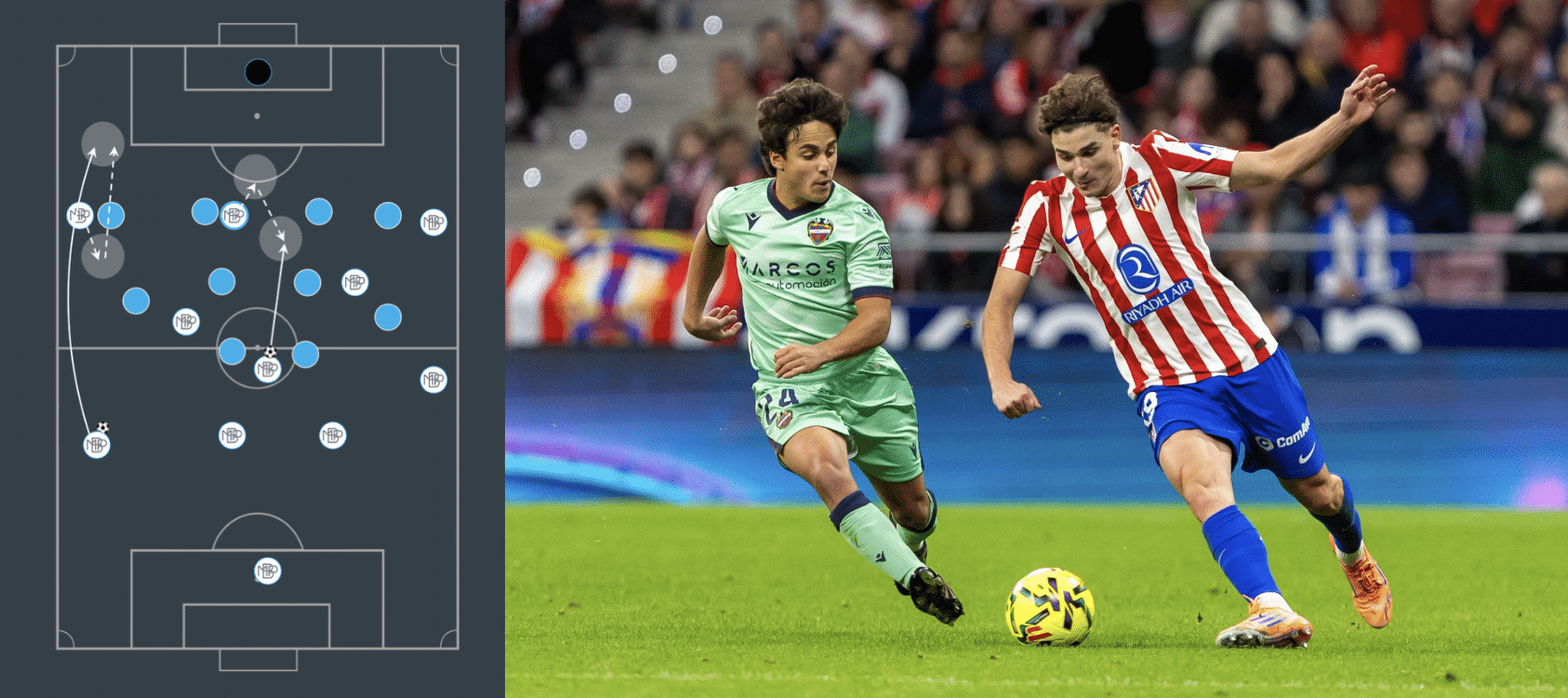
3. Fundamento: generar espacio propio para el desmarque
Este fundamento aparece cuando el atacante no posee el balón, la defensa es muy presionante y el posesor del balón tiene posibilidades de ejecutar el pase. Se debe iniciar la acción de desmarque en la dirección contraria a la de donde realmente uno se quiere desmarcar para crearse un espacio aprovechable.
La finta inicial debe ser de un mínimo de tres pasos, para atraer la marca lo suficiente. Para crear incertidumbre al marcador, es necesario que el delantero alterne las diagonales atrás y adelante mientras reconoce si el defensa aguanta más la posición o sigue su desmarque de cerca.
- Desmarque de apoyo + desmarque por la espalda.
- Desmarque por la espalda + desmarque por el frente.
- Si en alguno de estos movimientos anteriores el defensor cierra automáticamente el espacio que buscamos, iremos a recibir al pie.
En conclusión, el delantero móvil se ha convertido en un perfil determinante en el fútbol actual gracias a su capacidad para generar ventajas en diferentes alturas y contextos del juego. Su dominio de los tres fundamentos descritos —el desmarque a la espalda de los centrales, el desmarque diagonal en apoyo y la generación de su propio espacio mediante fintas— le permite ser una amenaza constante tanto al pie como al espacio. Estos comportamientos exigen una gran lectura del juego, precisión en los tempos y una gran técnica.
¿Quieres aprender más sobre los fundamentos individuales por demarcación?
El curso de “Especialista en fundamentos individuales por demarcación” te permitirá profundizar en los más de 90 fundamentos individuales por demarcación del jugador. Todos estos fundamentos nacen de un exhaustivo estudio de todas y cada una de las situaciones más comunes y relevantes en las que se encuentra cada jugador durante un partido en función de su posición en el campo. Detectadas estas situaciones en el juego, estudiamos cuáles son las respuestas óptimas que dan más posibilidades de éxito al jugador.